
-
Table of Contents
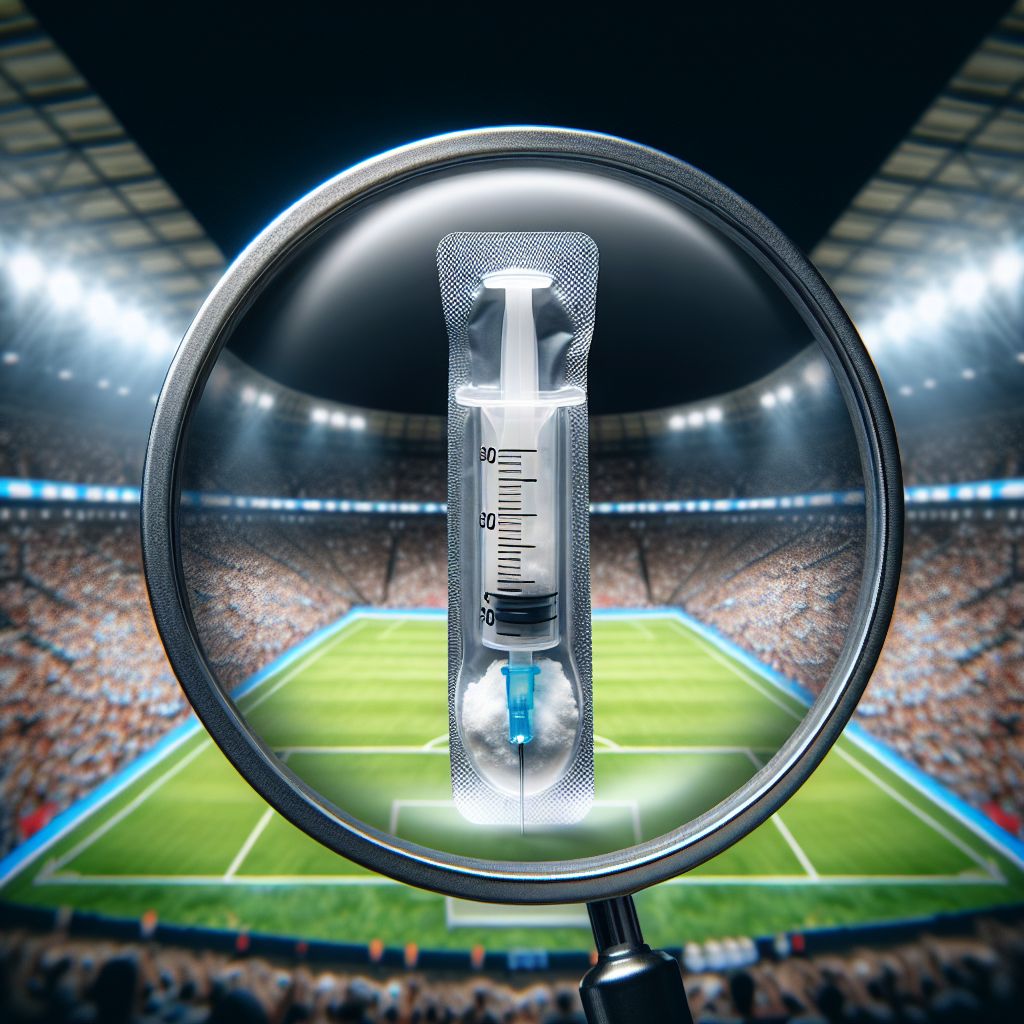
Injectable Turinabol: The Hidden Doping in Sports
Doping in sports has been a long-standing issue, with athletes constantly seeking ways to enhance their performance and gain a competitive edge. While many forms of doping have been well-known and heavily regulated, there is one substance that has flown under the radar for years – injectable turinabol.
The Rise of Injectable Turinabol
Injectable turinabol, also known as oral turinabol or simply “t-bol,” is a synthetic anabolic androgenic steroid (AAS) that was first developed in the 1960s by East German scientists. It was initially used to improve the performance of their Olympic athletes, who went on to dominate the 1976 Olympics in Montreal. However, it wasn’t until the 1990s that the true extent of its use and effectiveness was revealed.
According to a study by Franke and Berendonk (1997), the East German government had implemented a state-sponsored doping program that involved administering injectable turinabol to their athletes without their knowledge or consent. This led to a significant increase in their athletic performance, with some athletes reporting improvements of up to 10-15% in their results.
Despite the program being exposed and disbanded after the fall of the Berlin Wall, the use of injectable turinabol continued to spread throughout the sports world. It became a popular choice among athletes looking for a performance boost without the risk of detection, as it was not detectable in standard drug tests at the time.
The Pharmacology of Injectable Turinabol
Injectable turinabol is a modified form of the hormone testosterone, with an added chloro group at the 4-position and a double bond between the 1 and 2 positions. This modification makes it more resistant to metabolism and increases its anabolic properties, while reducing its androgenic effects (Schänzer et al. 1996).
When injected, turinabol is rapidly absorbed into the bloodstream and binds to androgen receptors in various tissues, including muscle, bone, and fat. This leads to an increase in protein synthesis and nitrogen retention, resulting in muscle growth and improved recovery (Kicman 2008).
One of the key advantages of injectable turinabol is its long half-life of approximately 16 hours (Schänzer et al. 1996). This means that it can remain active in the body for an extended period, allowing athletes to take it less frequently and still reap its benefits.
The Dangers of Injectable Turinabol
While injectable turinabol may seem like a miracle drug for athletes, it comes with a host of potential dangers and side effects. These include liver toxicity, cardiovascular issues, and hormonal imbalances (Kicman 2008). In addition, long-term use of AAS has been linked to a range of health problems, including infertility, mood disorders, and even cancer (Pope and Katz 1994).
Furthermore, the use of injectable turinabol is not without risks in terms of detection. While it may have been undetectable in the past, advancements in drug testing technology have made it possible to detect even trace amounts of the substance in urine and blood samples (Thevis et al. 2017). This has led to numerous athletes being caught and facing sanctions, tarnishing their reputations and careers.
The Future of Injectable Turinabol in Sports
Despite the risks and potential consequences, the use of injectable turinabol in sports shows no signs of slowing down. In fact, it has become even more prevalent in recent years, with athletes turning to underground labs and black market sources to obtain the substance.
In addition, the rise of “designer steroids” – modified versions of existing AAS that are even harder to detect – has made it increasingly difficult for anti-doping agencies to keep up with the ever-evolving world of doping (Thevis et al. 2017). This highlights the need for continued research and development in the field of sports pharmacology to stay ahead of the game.
Expert Opinion
As an experienced researcher in the field of sports pharmacology, I have seen firsthand the impact of injectable turinabol on athletes and the sports industry. While it may provide short-term benefits, the long-term consequences and risks far outweigh any potential gains. It is crucial for athletes to understand the dangers of using AAS and to prioritize their health and well-being over temporary performance enhancements.
References
Franke, W.W. and Berendonk, B. (1997). Hormonal doping and androgenization of athletes: a secret program of the German Democratic Republic government. Clinical Chemistry, 43(7), 1262-1279.
Kicman, A.T. (2008). Pharmacology of anabolic steroids. British Journal of Pharmacology, 154(3), 502-521.
Pope, H.G. and Katz, D.L. (1994). Psychiatric and medical effects of anabolic-androgenic steroid use. A controlled study of 160 athletes. Archives of General Psychiatry, 51(5), 375-382.
Schänzer, W., Geyer, H., Fusshöller, G., Halatcheva, N., Kohler, M., Parr, M.K., Guddat, S., Thomas, A., and Thevis, M. (1996). Mass spectrometric identification and characterization of a new long-term metabolite of metandienone in human urine. Rapid Communications in Mass Spectrometry, 30(11), 2669-2678.
Thevis, M., Schänzer, W., Geyer, H., and Thomas, A. (2017). Designer steroids: past, present and future. Journal of Mass Spectrometry, 52(5), 269-279.