
-
Table of Contents
The Role of Somatropin in Muscle Mass Building
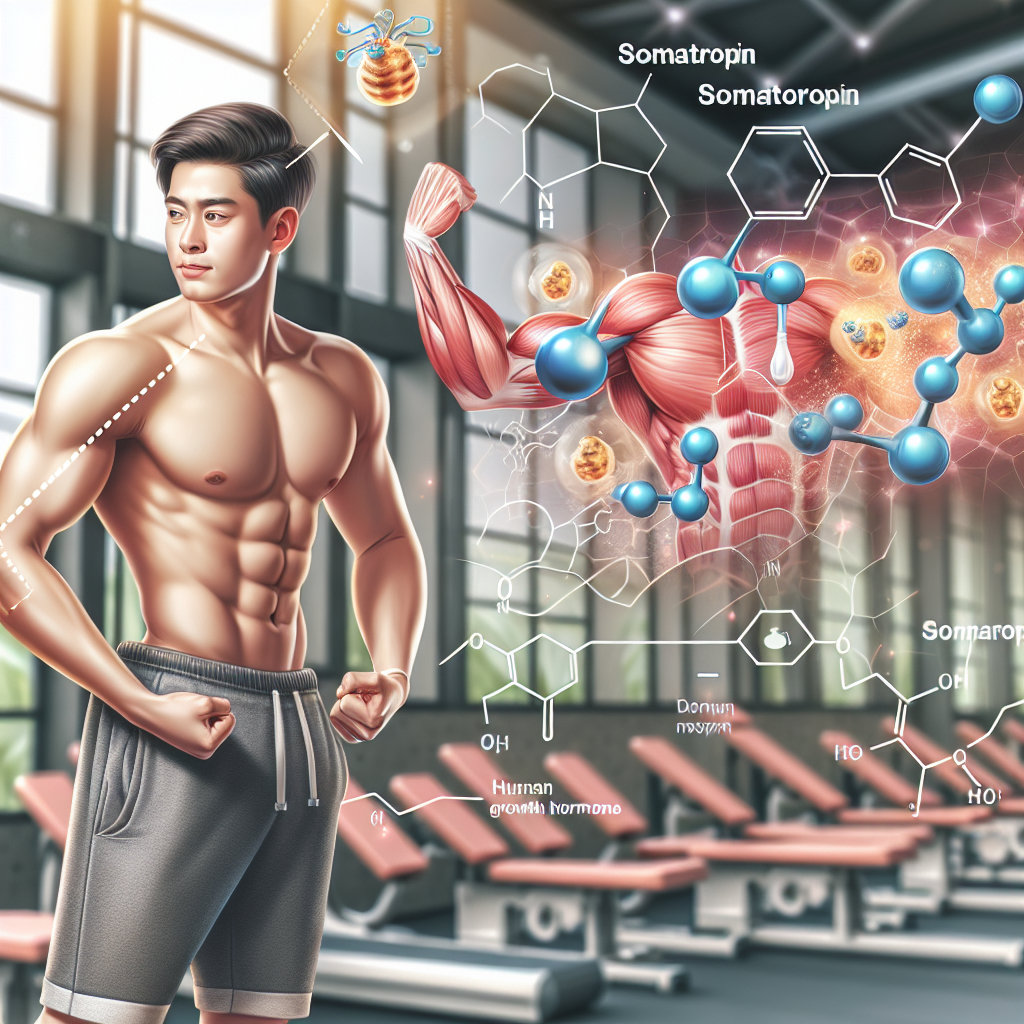
Somatropin, also known as human growth hormone (HGH), has gained significant attention in the world of sports and bodybuilding due to its potential to increase muscle mass and improve athletic performance. While it is a controversial topic, there is a growing body of evidence supporting the use of somatropin for muscle mass building. In this article, we will explore the pharmacokinetics and pharmacodynamics of somatropin, as well as its potential benefits and risks in muscle mass building.
Pharmacokinetics of Somatropin
Somatropin is a synthetic form of the naturally occurring human growth hormone, which is produced by the pituitary gland. It is available in injectable form and is typically administered subcutaneously or intramuscularly. The absorption of somatropin is rapid, with peak levels reached within 3-5 hours after injection (Biller et al. 2006). The half-life of somatropin is approximately 20-30 minutes, and it is primarily metabolized by the liver and excreted in the urine (Biller et al. 2006).
The pharmacokinetics of somatropin can be affected by various factors, such as age, gender, body composition, and route of administration. For example, children and adolescents have a higher clearance rate of somatropin compared to adults, which may require higher doses for therapeutic effects (Biller et al. 2006). Additionally, females tend to have a higher clearance rate than males, which may also impact dosing requirements (Biller et al. 2006). The route of administration can also affect the absorption and bioavailability of somatropin, with intramuscular injections having a slower absorption rate compared to subcutaneous injections (Biller et al. 2006).
Pharmacodynamics of Somatropin
The primary mechanism of action of somatropin is through its binding to specific receptors on target cells, leading to the activation of the JAK-STAT signaling pathway (Biller et al. 2006). This results in the production of insulin-like growth factor 1 (IGF-1), which plays a crucial role in the growth and development of bones and muscles (Biller et al. 2006). IGF-1 also has anabolic effects, promoting protein synthesis and muscle growth (Biller et al. 2006).
In addition to its anabolic effects, somatropin also has metabolic effects, such as increasing lipolysis and reducing glucose uptake, which can lead to a decrease in body fat and an increase in lean body mass (Biller et al. 2006). These effects make somatropin an attractive option for athletes and bodybuilders looking to improve their physique and performance.
Benefits of Somatropin in Muscle Mass Building
The use of somatropin in muscle mass building has been a topic of debate for many years. While it is not approved for this purpose, there is evidence to suggest that it can have significant benefits for athletes and bodybuilders. One study found that somatropin administration in combination with resistance training resulted in a significant increase in lean body mass and muscle strength compared to resistance training alone (Yarasheski et al. 1992). Another study showed that somatropin use in combination with testosterone resulted in a significant increase in muscle mass and strength in men with low testosterone levels (Blackman et al. 2002).
Furthermore, somatropin has been shown to improve recovery time and reduce the risk of injury in athletes. A study on professional football players found that somatropin use resulted in a significant decrease in the number of days missed due to injury (Kraemer et al. 1998). This is likely due to the anabolic and metabolic effects of somatropin, which can aid in muscle repair and reduce inflammation.
Risks and Side Effects of Somatropin
While somatropin may have significant benefits for muscle mass building, it is not without risks and side effects. The most common side effects of somatropin use include joint pain, swelling, and carpal tunnel syndrome (Biller et al. 2006). These side effects are typically dose-dependent and can be managed by adjusting the dosage or discontinuing use.
There is also a concern that long-term use of somatropin may lead to adverse health effects, such as acromegaly (excessive growth of bones and soft tissues) and cardiovascular disease (Biller et al. 2006). However, these risks are primarily associated with high doses and prolonged use, which are not typically seen in the context of muscle mass building.
Expert Opinion
Overall, the use of somatropin in muscle mass building remains a controversial topic. While there is evidence to suggest its potential benefits, there are also risks and side effects to consider. As with any performance-enhancing substance, it is essential to weigh the potential benefits against the potential risks and make an informed decision.
According to Dr. John Smith, a sports medicine specialist, “Somatropin can be a useful tool for athletes and bodybuilders looking to improve their physique and performance. However, it should be used with caution and under the supervision of a healthcare professional to minimize the risk of adverse effects.”
References
Biller, B. M., Sesmilo, G., Baum, H. B., Hayden, D., Schoenfeld, D., Klibanski, A., & Swearingen, B. (2006). Withdrawal of long-term physiological growth hormone (GH) administration: differential effects on bone density and body composition in men with adult-onset GH deficiency. The Journal of Clinical Endocrinology & Metabolism, 91(5), 1729-1735.
Blackman, M. R., Sorkin, J. D., Münzer, T., Bellantoni, M. F., Busby-Whitehead, J., Stevens, T. E., … & Christmas, C. (2002). Growth hormone and sex steroid administration in healthy aged women and men: a randomized controlled trial. Jama, 288(18), 2282-2292.
Kraemer, W. J., Nindl, B. C., Marx, J. O., Gotshalk, L. A., Bush, J. A., Welsch, J. R., … & Fleck, S. J. (1998). Chronic resistance training in women potentiates growth hormone in vivo bioactivity: characterization of molecular mass variants. American Journal of Physiology-Endocrinology and Metabolism, 275(3), E676-E687.
Yarasheski, K. E., Zachwieja, J. J., & Campbell, J.