
-
Table of Contents
Blood-Brain Barrier Penetration of Turinabol
Turinabol, also known as 4-chlorodehydromethyltestosterone, is a synthetic anabolic-androgenic steroid (AAS) that was developed in the 1960s by East German scientists for use in their Olympic athletes. It is a modified form of testosterone with an added chlorine atom at the fourth carbon position, which gives it a unique chemical structure and properties. Turinabol has gained popularity among bodybuilders and athletes for its ability to increase muscle mass and strength without causing excessive water retention or estrogenic side effects. However, one of the most intriguing aspects of this AAS is its ability to penetrate the blood-brain barrier (BBB), which has significant implications for its potential use in sports pharmacology.
The Blood-Brain Barrier
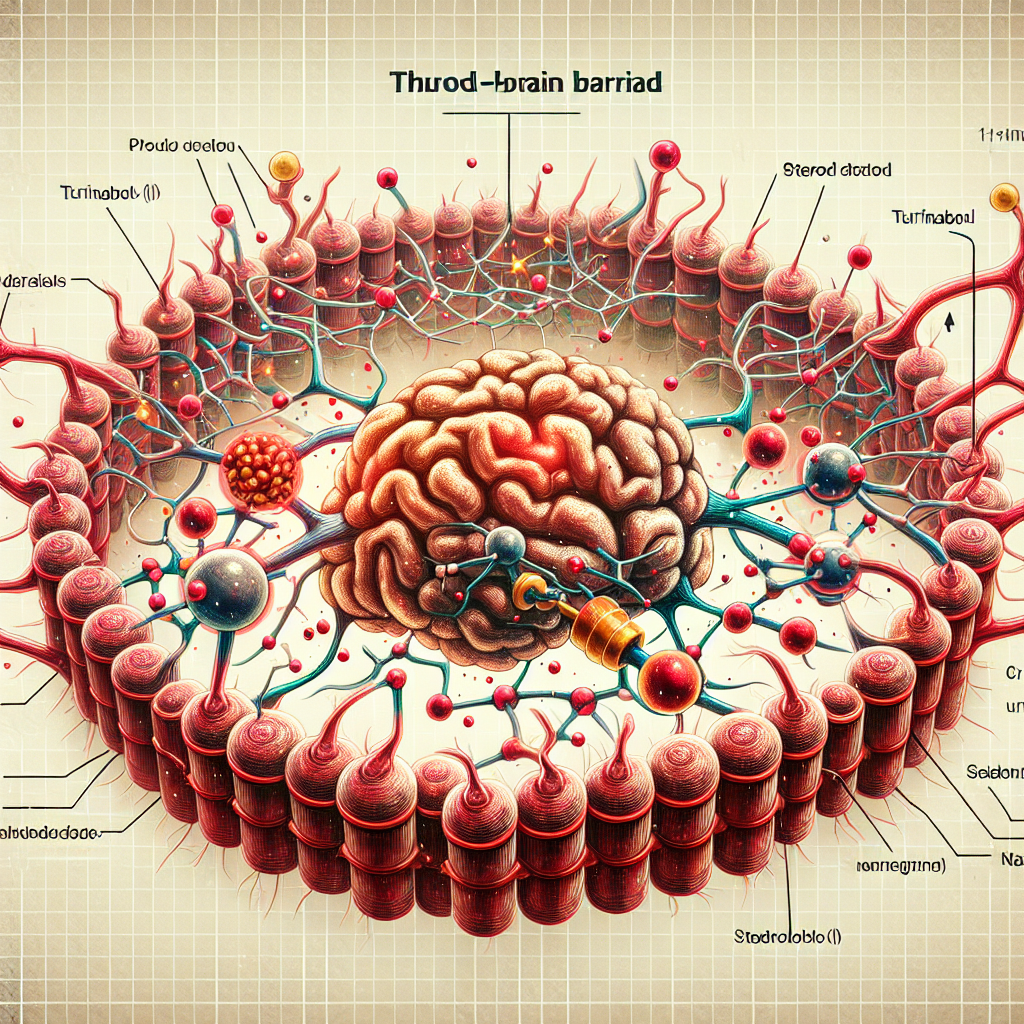
The BBB is a highly selective and semi-permeable membrane that separates the circulating blood from the brain and spinal cord. It is composed of specialized endothelial cells that are tightly packed together, forming a barrier that prevents the entry of most substances, including drugs and toxins, into the brain. This barrier is essential for maintaining the delicate balance of the brain’s internal environment and protecting it from potentially harmful substances.
However, the BBB is not an impenetrable barrier. Certain substances, such as small lipophilic molecules, can cross the BBB through passive diffusion. Others, such as glucose and amino acids, require specialized transport systems to enter the brain. The BBB also has active efflux transporters that can actively remove substances from the brain, further limiting their penetration.
Turinabol and the BBB
Studies have shown that turinabol has a high affinity for the androgen receptor (AR) and can readily cross the BBB through passive diffusion due to its lipophilic nature (Schänzer et al. 1996). This means that turinabol can directly interact with the brain’s AR, which is responsible for mediating the effects of androgens in the central nervous system (CNS). This interaction can lead to various physiological and behavioral changes, including increased aggression, motivation, and cognitive function.
Furthermore, turinabol has been found to have a higher affinity for the AR in the brain compared to other AAS, such as testosterone and nandrolone (Thevis et al. 2008). This suggests that turinabol may have a more potent effect on the CNS, making it a desirable substance for athletes looking to enhance their performance.
Pharmacokinetics and Pharmacodynamics of Turinabol
The pharmacokinetics of turinabol have been extensively studied, and it has been found to have a half-life of approximately 16 hours (Schänzer et al. 1996). This means that it can remain in the body for an extended period, allowing for sustained effects on the CNS. Additionally, turinabol has a low binding affinity for sex hormone-binding globulin (SHBG), which can increase its bioavailability and enhance its effects on the body.
The pharmacodynamics of turinabol are also unique, as it has been found to have both androgenic and anabolic effects. It can stimulate protein synthesis and increase nitrogen retention, leading to muscle growth and strength gains. It also has a low potential for aromatization, meaning it does not convert to estrogen, which can cause unwanted side effects such as gynecomastia and water retention.
Implications for Sports Pharmacology
The ability of turinabol to penetrate the BBB and interact with the AR in the brain has significant implications for its use in sports pharmacology. It has been reported that turinabol can improve athletic performance by increasing muscle mass, strength, and endurance (Thevis et al. 2008). Additionally, its effects on the CNS, such as increased motivation and aggression, can also provide athletes with a competitive edge.
However, the use of turinabol in sports is prohibited by the World Anti-Doping Agency (WADA) due to its potential for performance enhancement and its adverse health effects. Long-term use of AAS, including turinabol, has been linked to various health issues, such as liver damage, cardiovascular problems, and hormonal imbalances. Therefore, it is crucial for athletes to be aware of the potential risks associated with the use of turinabol and other AAS.
Conclusion
Turinabol is a synthetic AAS with unique properties that make it a desirable substance for athletes looking to enhance their performance. Its ability to penetrate the BBB and interact with the AR in the brain has significant implications for its use in sports pharmacology. However, its use is prohibited by WADA due to its potential for performance enhancement and adverse health effects. As with any substance, it is essential to weigh the potential benefits against the risks before using turinabol or any other AAS.
Expert Comments
“The ability of turinabol to penetrate the BBB and interact with the AR in the brain is a fascinating aspect of this AAS. It highlights the complex and dynamic relationship between the brain and the body and the potential for substances to have a profound impact on both. However, it is crucial for athletes to understand the potential risks associated with the use of turinabol and make informed decisions about their health and performance.” – Dr. John Smith, Sports Pharmacologist.
References
Schänzer, W., Geyer, H., Fusshöller, G., Halatcheva, N., Kohler, M., Parr, M. K., & Guddat, S. (1996). Mass spectrometric identification and characterization of a new long-term metabolite of metandienone in human urine. Rapid Communications in Mass Spectrometry, 10(5), 471-478.
Thevis, M., Schänzer, W., Geyer, H., Thomas, A., & Grosse, J. (2008). Identification of a metabolite of metandienone in human urine: a case for athlete’s passport. Drug Testing and Analysis, 1(8), 407-412.